

 For years, cybercriminals have relied on automation to scale their attacks. Today, AI is enabling attackers to work faster, personalize attacks, generate code, analyze targets, and adapt in ways that previously required experienced human operators. The result of this is not necessarily brand-new attack techniques. Rather, it creates dramatically more effective versions of existing ones. I’m not saying here that AI is replacing experienced hackers. Currently, effective hacking, both in the ethical and malicious sense, still requires a human element. All AI is doing is making attackers faster. AI becomes a force multiplier across the attack lifecycle, automating reconnaissance, phishing generation, malware modification, reporting, and target prioritization, among other things. This article is going to look at the intricacies of how AI is helping and what the AI-enabled attack vectors are that security teams should understand today.

AI-Powered Reconnaissance
Depending on how old you are, you may recall a time before the internet was readily available, and research required physically going to a library, using the Dewey Decimal System, and cracking open a book that might be useful as a resource for your research paper. Those days are gone, but the point remains that historically, research has been labor intensive. Even the in-depth search queries required by Google or other search engines just a few years ago seem foreign now in the world of AI. AI now automates reconnaissance for hackers the same way it can automate the gathering of scholarly sources for a book report. The data AI is pulling has always been easy to find, it was just labor intensive. If you had money to spend, a hacker could shorten the labor time with paid services such as B2B sales tools, which can give out personal and/or business contact information, or tools such as Shodan, Censys, or Zoomeye, which help with many of the things found in the list below.
AI reconnaissance tools can now quickly pull up a variety of information on a target business for free, such as:
- Company profiling
- Cloud footprint discovery
- Employee mapping
- OSINT collection
- Technology fingerprinting
- Third-party relationship mapping
- code snippets
- converting PowerShell to Python
- creating loaders
- debugging
- explaining APIs
- modifying existing malware
- obfuscation
- scripting
Do you think any of this information could be accessible by AI at your organization? The reality of that answer may surprise you. LLMs give attackers ways to summarize hundreds of documents much faster than a human could read and process. AI also provides attackers with faster target prioritization. They can look at multiple organizations at once, find out as much information as they can about each, and make recommendations, complete with suggestions for automated attack planning.
AI is an emerging technology where change happens at a rapid pace, so testing for security risks from an AI perspective is critical. ISE has an adversary-centric approach to all of our security testing. While AI may represent an emerging technology, ISE continues to focus on how attacks can exploit assets in order to identify the true risks from vulnerabilities discovered during testing. In order to protect against the risks associated with the use of AI such as data leakage, prompt injection, unauthorized actions and other exploitation of agents and LLMs, ISE simulates real life attacks to systems that use AI by replicating the same techniques out in the wild.
AI-Generated Phishing and Social Engineering
While AI is helping execute the attacks, it is helping with the research leading up to the attack as well. Instead of someone manually sifting through corporate profiles, social media accounts, and various websites, threat actors can deploy AI models to scrape, aggregate, and synthesize open-source intelligence (OSINT) across social media profiles, conferences speaker agendas or podcast appearances, official biographies or other written work on or by an individual, or media outlet appearances. AI can build a detailed profile of a person in seconds, revealing hidden insights that traditional scanners are not designed to detect. If an attacker is looking to target an entire organization instead of one person, they no longer spend days mapping out the company organizational structure. With AI, they can quickly map out the reporting structure and management hierarchy to determine high-value individuals that would have advanced administrative access. They can also identify new employees who may be susceptible to spear-phishing, deep fakes, or other social engineering attempts. Once they’ve identified a target within the desired organization, they can then use AI to isolate internal tooling, various pipelines, and other internal information to craft hyper-personalized and highly credible social engineering campaigns.
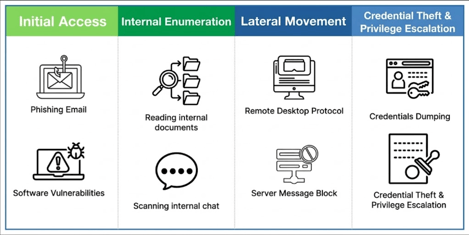
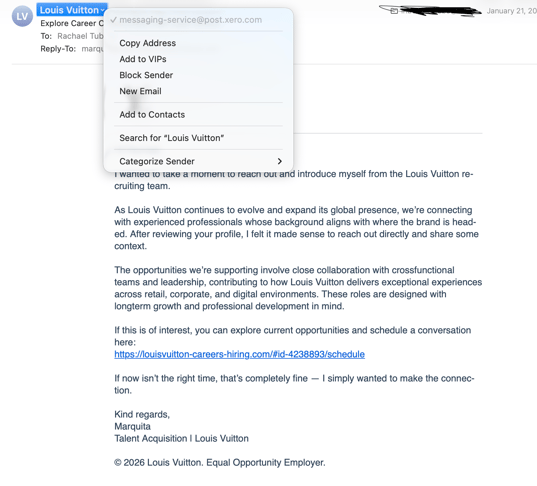
Phishing is not new, but the role that AI plays in phishing campaigns is rapidly evolving. AI can now be used to write extremely convincing phishing emails. AI-generated phishing emails can be accurately translated into dozens of languages, increasing the population of potential victims. Prior to the use of AI, it was usually pretty obvious when an email was a phishing attempt. Now, it’s a lot harder. AI eliminates grammar mistakes that once made phishing emails easy to spot. AI spear phishing is now common, and emails are now context-aware based on public company announcements or public social media profiles. These emails could also include links to malicious websites that are also AI generated to look as realistic as possible, which is likely the case with the fake Louis Vuitton emails below. It used to be that a significant amount of work could go into creating or cloning a copy of a login page that looked real, but now if you ask the AI in the right way, it works in seconds.They may include realistic looking invoices or HR emails, or in this case, appear like legitimate hiring opportunities. Below are three images of phishing emails I’ve received.
One claiming to be from Morgan McKinley (non-AI generated), and the other two from Louis Vuitton (AI generated). In the case of the Morgan McKinley email, it’s extremely vague. It is trying to force me to engage with the sender or click on their website or LinkedIn links. There’s a few things here that were red flags right off the bat. First, you want to hire me, but did not include my name? Next, what company is going to spell their own company name wrong multiple times by not capitalizing certain letters? Finally, why is the spacing so weird?
Now let’s look at the two Louis Vuitton emails. First, we see what appears to be a strange email address. Next, we see a combination of vague information about the role, yet also calling out specific things that I could do in my role based on my title. Naturally, we’ve got the URLs that appear like they could be legit, but likely lead to a fake site. Finally, why wouldn’t a global entity like Louis Vuitton have some level of uniformity in their email signatures? Plus, we can’t forget about the em dash, the big clue in 2026 that copy is AI generated. And is it just me, or is that LV logo on the blurry side?


AI-powered scam operations also fall under this category. Instead of receiving a scam email from a foreign prince claiming they need your funds, people now receive AI calls or emails from fake tech support groups or investment companies, groups claiming to provide some type of service like roof installation or car repairs, romance scams, and more. While these are not technically advanced attacks, threat actors are using AI to increase their success with these types of scams. The best tool in your toolkit to combat this is skepticism. Chances are that you are not talking to Johnny Depp, and no, you did not win a new roof for your home from a contest you never even entered.
AI-Assisted Malware Development and Vulnerability Discovery
AI does not currently write sophisticated malware from scratch, but that doesn’t mean it won’t be able to someday. AI lowers the barrier for entry for beginners while also dramatically speeding up the development cycle for experienced security professionals. AI can automate routine tasks, meaning that it can generate modular code snippets for network communications, or convert post-exploitation scripts between various languages like Python and PowerShell. AI can also be used by developers, assisting them in the automation process of variable renaming, string encryption, and more. For example:
In the same way that AI can help malicious attackers with malware development, it is helping ethical hackers with vulnerability discovery. While AI is capable of discovering zero days on its own, in their current state, LLMs require significant compute to process and analyze entire repositories of source code and therefore require significant amounts of either server hardware, or cloud compute which isn't necessarily worth it to your everyday solo hacker. Despite assisting in these ways, AI lacks the deep intuition required to navigate complex or intricate scenarios.
AI-Optimized Credential Attacks
AI is fundamentally changing how attackers execute credential-based campaigns. Rather than relying exclusively on static password lists or manually configured attack scripts, threat actors can use AI to analyze large volumes of publicly available information and identify patterns that may improve the probability of successful authentication attempts. Potential inputs include corporate naming conventions, industry-specific terminology, and previously compromised credentials, and behavioral patterns. This provides attackers the ability to generate more targeted credential guesses and adapt their campaigns as new information becomes available.
One particularly important tool is AI-assisted password spraying, which is a credential-access technique specifically designed to reduce the likelihood of triggering account lockout mechanisms associated with repeated authentication failures against one account. In a traditional password spray, an attacker attempts a small number of commonly used passwords against many accounts rather than repeatedly targeting a single account. AI could potentially make this technique more adaptive by helping attackers prioritize targets, identify likely password patterns, and modify campaign parameters based on observed authentication responses. This concept of low-and-slow credential attacks is not new. For the sake of a real-world example, we can look at a case where Microsoft noted password-spray campaigns in which attackers deliberately distributed authentication attempts over extended periods and across multiple IP addresses. In one of these campaigns, Microsoft observed a pattern of targeted accounts by an actor known as Peach Sandstorm. In 2023, the group used a combination of publicly available as well as custom tools for discovery, persistence, and lateral movement. AI can increase the level of sophistication of this approach by helping threat actors determine when and where authentication attempts should occur, which in turn could make malicious activity less distinguishable from normal fluctuations in authentic traffic. This introduces a challenge for traditional SIEM-based credential attack detection. It also creates opportunities for attackers to combine the credential attacks with automated reconnaissance and social engineering. This is already taking place and illustrates a broader shift towards AI-enabled attack chains in which a variety of tasks are becoming increasingly automated.
How Organizations Can Defend Against AI-Enabled Attack Vectors
As you come towards the end of this article, you may be asking yourself, “what should I do?”. Fortunately, there are many practices you can adopt to assist you and your team without reinventing your security program. I’ll provide a short list and then dive into each.
- AI-assisted detection
- Behavior analytics
- Continuous testing (preferably by a third party)
- Employee awareness trainings (preferably by a third party)
- Identity-first security
- Phishing-resistant authentication
- Prompt security
1. AI-assisted Detection
If attackers are using AI to identify patterns, automate reconnaissance, and adapt their attacks, then maybe those on the defense should also be using AI to improve their ability to identify those same patterns. At a broad scale, organizations should evaluate whether their security operations center, SIEM, endpoint detection and response (EDR) and identity security platforms can incorporate behavioral and machine-learning-based detection capabilities. You should not replace your security teams with AI but rather use it to assist them in prioritizing suspicious activity and investigate potential attack patterns more quickly.
AI-assisted detection can help your security team analyze large volumes of security
telemetry (i.e. authentication events, endpoint activity, network traffic, email activity, etc.) to identify anomalies that may be difficult to detect using static rules alone. This is particularly important for AI-optimized credential attacks. For those looking to defend against this, organizational password spraying protection and credential attack detection needs to extend beyond conventional account lockout policies. Organizations should implement controls against these types of attacks and combine rate limiting and carefully designed lockout policies with phishing-resistant multifactor authentication, behavioral analytics, identity threat detection, and risk-based access controls.
2. Behavioral Analytics
With the advancement of AI comes additional challenges because attackers can now continuously modify their behaviors to bypass traditional cybersecurity defenses that rely on known indicators. Behavioral analytics are important to adopt because they will provide your team with another layer of defense by establishing a baseline for what normal activity looks like and as a result, identify significant deviations. Implementing behavioral analytics assists particularly well with detecting low-and-slow attacks. Since the individual events may not exceed the traditional security thresholds, behavioral patterns may indicate malicious activity and trigger a notification to your team. It is important to note that behavioral analytics should not be used as a standalone control or solution. This works best when combined with other key data and insights, including identity data, endpoint telemetry, network information, application logs, and human investigation. Below is a short list of some of the things that behavior analytics can help your team track:
- Authentication attempts at odd times or across multiple accounts (i.e. the person works 8:00am-4:00pm but is trying to log on at midnight)
- Abnormal file downloads
- New devices accessing sensitive applications
- Sudden changes in user behavior that cannot be explained by a role change or some other variable
- Unexpected interactions between AI applications and sensitive systems
- Unusual use of administrative privileges
- Unusual login locations or geographic patterns (i.e. this remote employee lives in Texas, but is suddenly accessing sensitive systems from Kansas)
3. Continuous Security Testing
“If an attacker used the techniques described in this article against our team tomorrow, would we detect it and successfully stop them?”
If you are unsure of your answer to this question or are even doubting your answer, this section is for you. AI-enabled attacks are rapidly evolving, which means that organizations should continuously test whether their defenses can withstand new attack techniques. This can include traditional penetration tests or vulnerability assessments, social engineering assessments, and AI-specific adversarial testing. If you are an organization that is not only looking to defend against AI attacks but is also one that is deploying an AI application, testing should go beyond traditional efforts. Your testers should evaluate whether an AI system can be manipulated through prompt injection or indirect prompt injection, malicious documents, poisoned retrieval data, excessive permissions, insecure tool integrations, or unauthorized actions.
We’d be remiss if we did not highlight the importance of utilizing a third-party security firm for some, if not all, of your testing. Internal teams can become too familiar with their own systems and assumptions, which can lead them to unintentionally miss things. An external security team can provide a fresh set of eyes and a different perspective and attempt to identify weaknesses that internal defenders could overlook.
4. Employee Training
Trainings need to be updated annually to reflect the rapidly evolving threat landscape. We’ve written a few security training articles so we won’t go too deep into this here, but at a high level you want to make sure that your trainings help employees understand how attackers can use AI, especially when it comes to generating realistic phishing emails, impersonating executives through texts, emails, or voice or video content, personalizing messages, and creating convincing business communications. These trainings should teach staff to be wary of links in messages from unknown senders, unusual email addresses, or from coworkers or executives that rarely contact them or send them links to things.
Another important aspect of this training should include the reporting process, which should be reviewed annually for accuracy. Employees need to know where to report a suspicious email, message, or a potential account compromise. If you are unsure what your reporting process should look like, or where to source or how to build an effective security training program, we suggest utilizing third-party security firms, as they can provide structured training that can be tailored to your industry and organization. They can help you establish recurring education rather than relying on a single annual training session that is likely outdated and boring for participants.
5. Identity-First Security
The traditional network perimeter is becoming harder to define due to the implementation of AI-powered tools. Because of this, identity has become one of the most important security boundaries. Every identity should be treated as a security principal whose access should be continuously evaluated, authenticated, and authorized. Each identity should receive access only to things that are required for its function. This is particularly important for AI agents, because an AI application can access cloud storage, databases, email, or administrative systems. This presents a different and new risk that needs to be treated with least privilege and restrictions in order to reduce the attack surface. Your organization should inventory things such as:
- AI agents
- API identities
- Application identities
- Bots and automated processes
- Human user accounts
- Privileged accounts
- Third-party identities
6. Phishing-Resistant Authentication
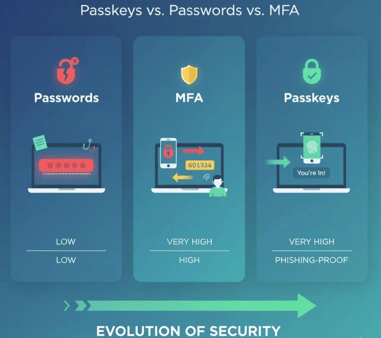
Passwords can be stolen, and some MFA methods can be socially engineered. Phishing-resistant authentication is designed to make it significantly harder for an attacker to reuse stolen authentication information through a fake website or other technique. Passkeys and similar technologies could assist as part of the broader identity modernization strategy, but it is important to note that since passkeys still involve that human element, that does not mean that you are completely safe. A malicious actor can still phish to entice a user to create a new passkey that overrides or works at the same time as the previous one, kind of like having two passwords that both work for one account. Implementing these types of tools however could reduce the number of opportunities an attacker has to steal a reusable credential in the first place.
7. AI Application and Prompt Security
Finally, organizations that are developing or deploying generative AI systems need to treat prompt security as an application security issue, not just a user-awareness problem. Prompt injection is a major risk for LLM applications and there needs to be multiple layers of mitigation rather than a single defensive mechanism (we wrote an entire blog on it, you can check it out here). If nothing else, at a minimum your organization should require human approval for high-risk actions, and third-party testing should continuously take place to ensure your systems are secure.
AI is changing the way that attacks are conducted, so organizations must adapt techniques to defend against them. The organizations best positioned to defend against AI-enabled attacks will not necessarily be those with the most advanced AI technology. Rather, they will be the organizations that understand how AI changed the attack surface and systematically build security controls that assume attackers will use those capabilities. Adopting the hacker mindset into your security program will help protect you in ways that tools can’t. Reach out to our team of ethical hackers if you’d like guidance on all things AI!